

Tension Headaches & Tech Neck: Causes, Symptoms, and Relief
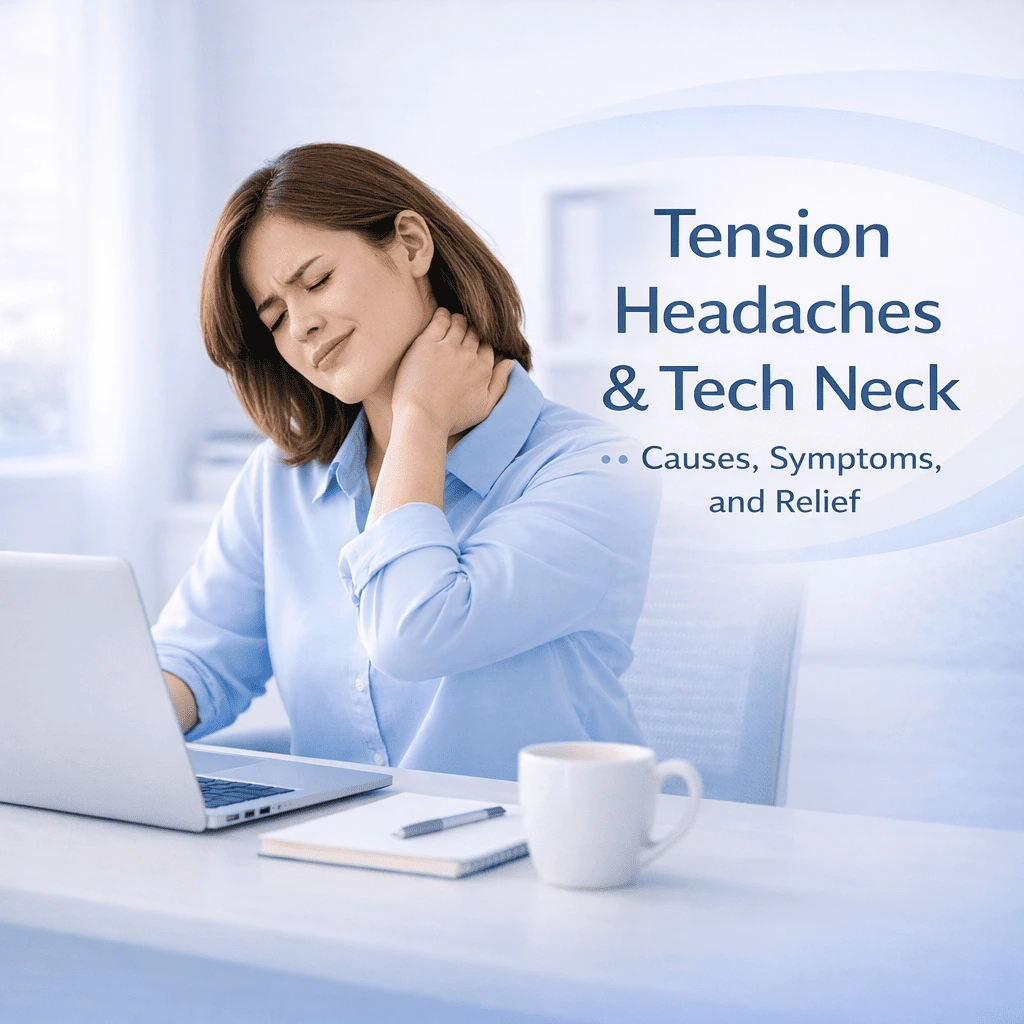

Tension Headaches & Tech Neck: Is Your Office Job Causing Chronic Pain?
A tension headache caused by poor posture—often referred to as Office Syndrome—is primarily caused by prolonged muscle strain in the neck and shoulders. Unlike migraines, which are neurological, these headaches stem from restricted blood flow and muscle “trigger points.” They can be treated through ergonomic adjustments, physical therapy, and advanced treatments like Low-Level Laser Therapy (LLLT).
Why Does My Office Job Give Me Headaches?
In the modern digital workplace, we spend hours hunched over laptops or tilting our heads down at smartphones—a condition known as “Tech Neck.” Initially, you may only feel stiffness in your upper back or shoulders. However, if left untreated, this postural strain evolves. Chronic tension in the trapezius muscles restricts oxygen and blood flow to the head, resulting in a persistent, dull ache that feels like a tight band around your skull.
Is it a Migraine or a Postural Tension Headache?
It is crucial to distinguish them because the treatment for a chemical-based migraine will not fix a muscle-based postural headache.
| Feature | Tension Headache (Postural) | Migraine |
| Pain Location | Both sides; radiates from neck/shoulders | Usually one side; throbbing pulse |
| Triggers | Long screen time, stress, “hunching” | Light, sound, smells, or hormones |
| Relief | Stretching & Physical Therapy | Medication & rest in a dark room |
Advanced Treatment Solutions
To stop a headache from becoming a chronic disability, you must treat the root cause—the musculoskeletal system.
1. Targeted Medication
For acute flare-ups, a physician may prescribe NSAIDs or muscle relaxants. These help manage pain but should be viewed as a temporary fix while you address your posture.
2. Rehabilitative Physical Therapy
Specialists use various modalities to “reset” your muscles:
-
Ultrasound Therapy: Uses sound waves to reduce deep-tissue inflammation.
-
Dry Needling: Specifically targets “trigger points” to release deep muscle knots.
-
Manual Therapy: Hands-on stretching to improve joint mobility.
3. Low-Level Laser Therapy (Cold Laser Therapy)
Low-Level Laser Therapy (LLLT), or Cold Laser, is a non-invasive treatment that uses specific wavelengths of light to interact with tissue. It is highly effective for those seeking a gentle yet powerful recovery from Office Syndrome because it:
-
Reduces Inflammation: Penetrates deep into the neck and shoulder muscles to reduce swelling and pain without generating heat.
-
Stimulates Cell Regeneration: Enhances “Photobiomodulation,” a process that helps damaged cells repair themselves faster.
-
Relieves Muscle Fatigue: Effectively treats the chronic fatigue of muscles caused by long hours of sitting.
-
Painless & Safe: Since it doesn’t use heat, it is completely comfortable and has no downtime, making it perfect for busy office professionals.
Conclusion: Prevention is Better Than Cure
Healing from Office Syndrome requires a multi-faceted approach. Beyond clinical treatment, you must adjust your environment—ergonomic chairs, monitor height, and frequent movement breaks are essential. If you experience persistent pain or numbness, consult a physical therapist or a specialist in rehabilitative medicine for a proper diagnosis.
Disclaimer: This content is for educational purposes only and is not a substitute for professional medical advice, diagnosis, or treatment. Always seek the advice of a qualified healthcare provider regarding a medical condition.