

Scoliosis: A Complete Guide to Causes, Symptoms, and Treatment
Understanding Scoliosis: A Complete Guide to Causes, Symptoms, and Treatment
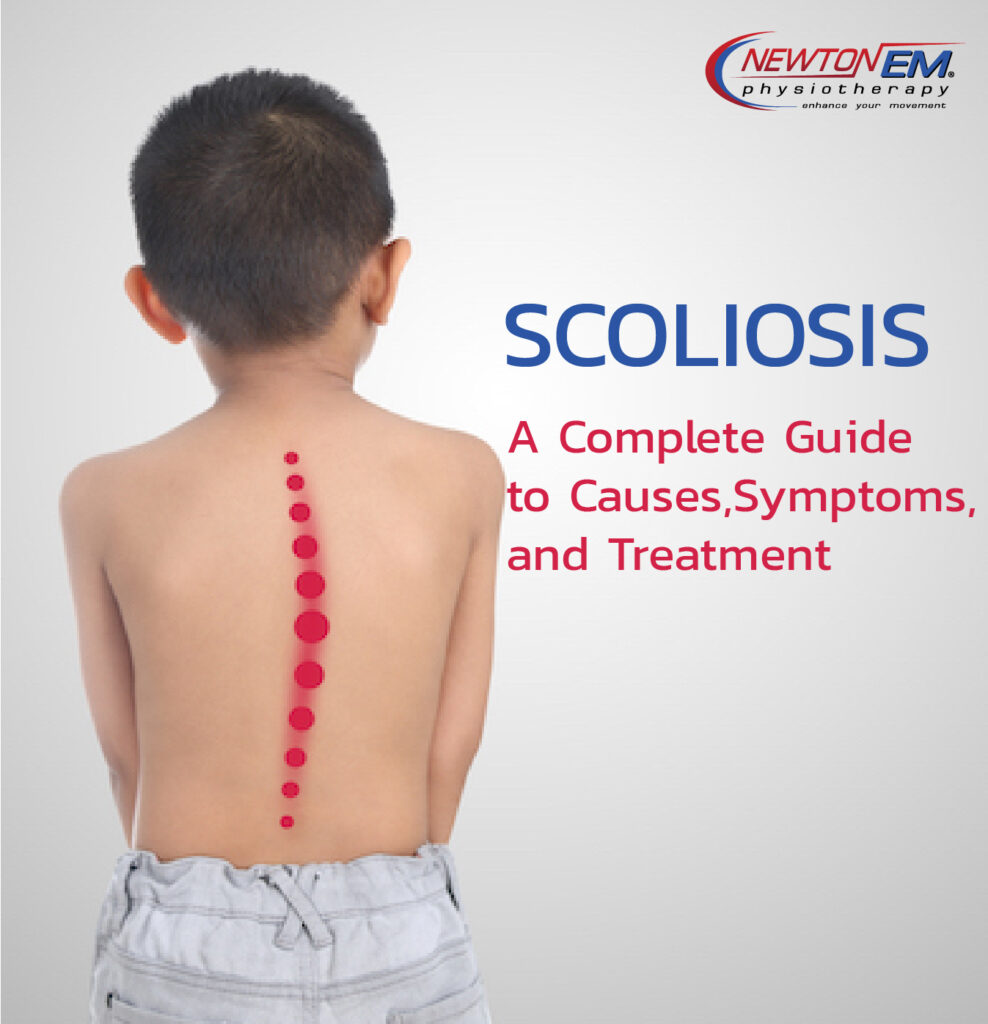
Scoliosis is a medical condition defined by an abnormal sideways curvature of the spine. Instead of a straight line, the spine twists or curves into an “S” or “C” shape. This creates an imbalance that can often be seen from behind, presenting as uneven shoulders, one shoulder blade (scapula) appearing more prominent than the other, or an uneven waist.
If left untreated, the spinal curve can progressively worsen. This not only leads to more visible deformity but also makes scoliosis treatment more complex and increases the risk of complications. Therefore, the most effective outcomes are achieved when scoliosis is diagnosed and treated at an early stage.
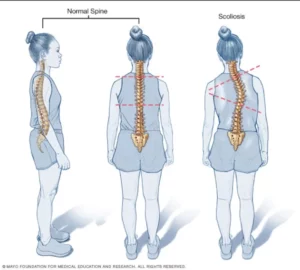
Image Source: Mayo Clinic
Currently, in 75-85% of cases, the exact cause is unknown; this is known as idiopathic scoliosis. The remaining 15-25% of cases may be linked to:
- Neuromuscular disorders: Such as Cerebral Palsy.
- Genetic factors.
- Congenital scoliosis: Caused by abnormal development of the vertebrae before birth.
How Does Scoliosis Change the Spine?
The spinal curvature can affect the neck (cervical), upper back (thoracic), or lower back (lumbar) region. This curve is not just a simple bend; it involves the rotation of the individual vertebrae.
This rotation is what causes the associated changes in the body. It pulls on the surrounding muscles and tissues, leading to tightness and weakness, which can, in turn, allow the curve to progress. When this rotation occurs in the upper back, it also twists the rib cage, resulting in the visible asymmetry or “rib hump” seen from behind.
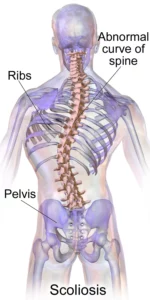
Image Source: en.wikipedia.org
Causes and Risk Factors for Scoliosis
Several key risk factors are associated with the development of scoliosis:
- Age: Symptoms most commonly appear in children and adolescents during their growth spurt just before puberty.
- Gender: While both boys and girls can develop mild scoliosis at similar rates, girls have a significantly higher risk of the curve worsening and requiring active treatment.
- Family History: Scoliosis can run in families. If a parent or sibling has the condition, the risk for other family members is higher.
How Can Scoliosis Affect the Body?
If a curve becomes severe, it can impact other parts of the body:
- Heart and Lungs: In severe thoracic scoliosis, the twisted rib cage can reduce the space in the chest, pressing against the heart and lungs. This can impair their function and lead to breathing difficulties.
- Back Pain: While many children with scoliosis do not experience pain, adults who had the condition in childhood may be more prone to chronic back pain.
- Physical Appearance: As the curve progresses, the changes to the body—such as uneven shoulders, hips, and prominent ribs—become more noticeable. This can have a significant impact on a person’s self-esteem and body image.
Is Scoliosis Dangerous?
When diagnosed with scoliosis, the main concerns are whether the curve will progress, if it will cause pain, and if it will lead to long-term spinal issues. Here’s what the medical data suggests:
- Curves greater than 50-70 degrees can potentially lead to problems with breathing.
- Nerve compression and back pain can occur due to the severe twisting and rotation of the spine.
- In growing children, curves can progress very quickly. It is vital to consult a doctor or physical therapist immediately upon detection to establish a monitoring and treatment plan.
How to Check for Scoliosis at Home (Self-Test)
You can perform a simple preliminary check at home for yourself or a family member. Early detection is key.
1. The Mirror Test
Stand shirtless in front of a mirror and look for:
- Are the shoulders level?
- Is one shoulder blade more prominent than the other?
- Does the waist look uneven?
- Does the body seem to tilt to one side?
2. Adam’s Forward Bend Test
This is the most common screening test used.
- Stand with feet together and legs straight.
- Bend forward slowly at the waist, as if touching your toes, letting your arms hang down.
- Have someone look at your back from behind.
If there is a prominence or “hump” on one side of the back (a “rib hump”), this is a positive sign for scoliosis.
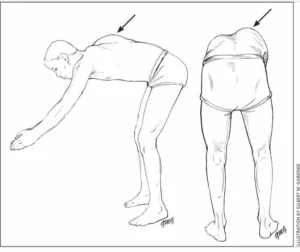
Illustration by Gilbert M. Gardner
While these are effective screening tools, the definitive diagnosis is made with an X-ray. An X-ray allows a doctor to see the spine’s alignment clearly and measure the precise angle of the curve (known as the “Cobb angle”).
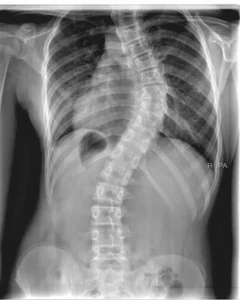
Image Source: orthobullets.com
Is Surgery Always Necessary for Scoliosis?
Many people assume that a scoliosis diagnosis automatically leads to surgery. This is not true.
For mild to moderate curves, non-surgical treatments like specialized physical therapy and bracing (in growing children) can be highly effective in halting or even reducing curve progression.
Surgery is typically reserved for severe curves (often over 50 degrees) that are likely to progress. While effective, surgery carries risks, such as potential nerve damage (which could lead to weakness) and a reduction in spinal flexibility of at least 25%.
Today, there are many advanced non-surgical techniques, including the Schroth Method, specialized Pilates, and specific exercises to strengthen the core. These methods can help reduce the curve, strengthen back muscles, and alleviate pain. Physical therapy has become a highly popular and beneficial primary treatment approach.
Scoliosis Treatment with Physical Therapy
Physical therapy is a key non-surgical treatment for scoliosis. The goal is to slow or stop the curve’s progression, reduce pain, and prevent secondary complications.
This is achieved through a targeted approach focusing on:
- Specific exercises to de-rotate the spine and re-align posture.
- Strengthening the core and back muscles that support the spine.
- Releasing muscles that have become overly tight due to the body’s compensation.
A specialized physical therapist will first conduct a thorough assessment to determine the cause and type of your curve. They will then design a customized exercise program tailored to your specific needs.
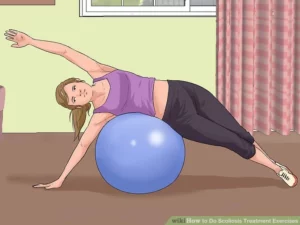
Image Source: wikihow.com
Frequently Asked Questions (FAQ)
Can physical therapy cure scoliosis?
Physical therapy focuses on exercises to reduce the spinal curve, improve posture, and strengthen the core. The results include:
- Pain reduction
- Improved mobility
- Better breathing mechanics
While PT cannot permanently reverse a structural curve, it can significantly reduce the angle and improve quality of life. It is an ideal solution for patients who wish to avoid surgery and its associated risks. Patients will need to continue a home exercise program to maintain the results.
Is scoliosis painful?
Most children and adolescents with mild scoliosis do not feel pain. However, if back pain does occur, it may suggest the curve is becoming more severe and is starting to put pressure on nerves, discs, joints, or muscles.
Does scoliosis get worse with age?
Many mild curves remain stable and do not progress. However, individuals in high-risk groups (like adolescents in a growth spurt) should be monitored with check-ups every 4-6 months. This allows a treatment plan to be implemented quickly if the curve starts to worsen.
Can scoliosis cause walking or breathing problems?
Yes, in severe cases. A significant curve can impact the spinal cord, affecting the coordination of leg muscles and making walking difficult. Simultaneously, the twisting of the rib cage can compress the heart and lungs, impacting respiratory and cardiovascular function.
How severe must the curve be to require treatment?
Even mild curves should be monitored regularly (every 4-6 months). An active treatment plan (like physical therapy or bracing) is typically started when the curve shows signs of progression. If a curve is left untreated and progresses beyond 50 degrees, a doctor will usually begin to discuss surgery as an option.
Is scoliosis a dangerous condition?
While not typically life-threatening, scoliosis can significantly impact quality of life by affecting the respiratory and cardiovascular systems. However, with modern monitoring and treatment, most people with scoliosis can live normal, active lives.
Disclaimer: The content in this article, including text, videos, and comments, is for informational and demonstrational purposes only. It is not intended to be a substitute for professional medical examination, diagnosis, or treatment. Viewers should not self-diagnose based on this content. Please consult your healthcare professional to determine the true cause of your symptoms and to avoid potential worsening of your condition.