

Herniated Disc: Causes, 4 Stages, and Non-Surgical Relief
Herniated Disc: Causes, Stages, and Non-Surgical Treatment Options
A herniated disc (often called a “slipped disc” or “ruptured disc”) occurs when the soft, jelly-like center of a spinal disc pushes through a tear in the tougher exterior casing. This condition causes intense pain, numbness, or weakness by irritating nearby nerves. While severe cases may require surgery, most people find relief through Physical Therapy and lifestyle modifications, especially when diagnosed in the early stages.
What is a Herniated Disc?
The spinal disc acts as a “spring” or shock absorber between your vertebrae. It consists of two main parts:
-
Annulus Fibrosus: The tough, flexible outer layer.
-
Nucleus Pulposus: The soft, jelly-like inner core.
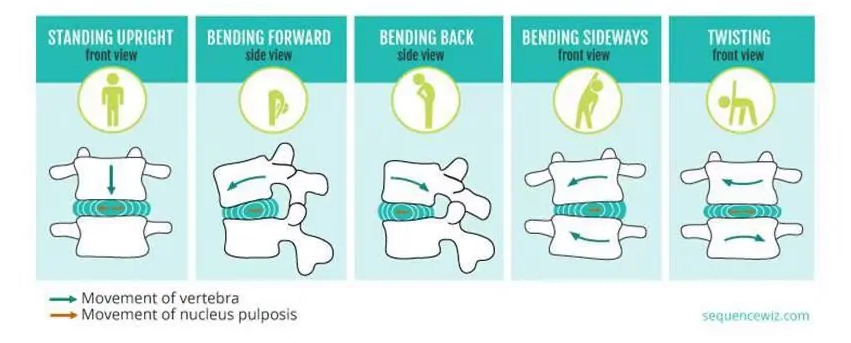
Intervertebral disc image: by sequencewiz.com
When the spine is subjected to excessive pressure—from heavy lifting, sudden twisting, or age-related wear and tear—the inner core can leak out, leading to what is medically known as a Herniated Nucleus Pulposus (HNP).
The 4 Stages of Disc Herniation
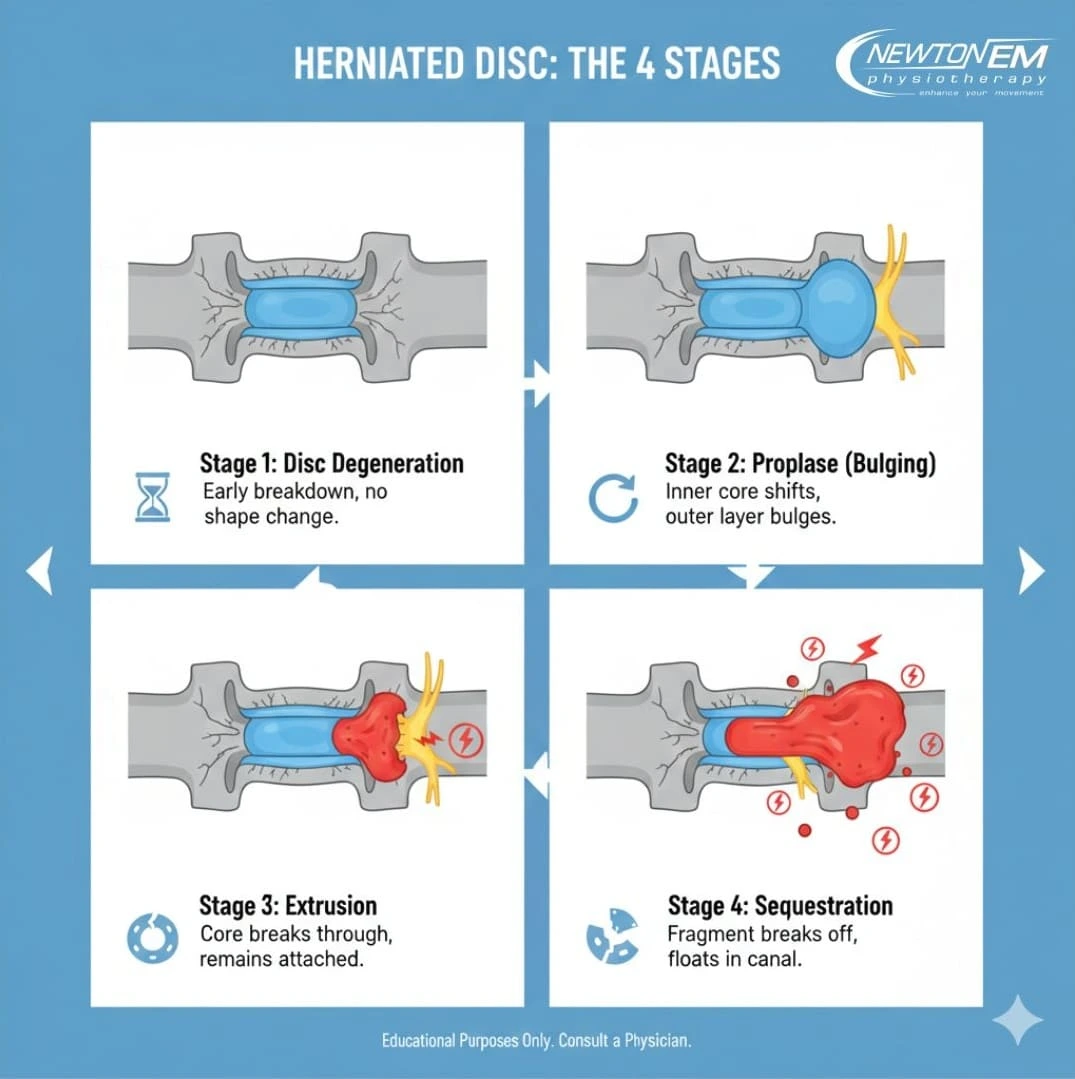
Understanding the severity of your injury is crucial for determining the right treatment plan. Medical professionals generally categorize the progression into four stages:
| Stage | Name | Description |
| Stage 1 | Disc Degeneration | Initial weakness in the outer layer without structural change. |
| Stage 2 | Prolapse (Bulging) | The inner core begins to shift, causing the outer layer to bulge slightly. |
| Stage 3 | Extrusion | The inner core breaks through the outer layer but remains attached to the disc. |
| Stage 4 | Sequestration | The inner core breaks off completely and becomes a free-floating fragment in the spinal canal. |
Common Symptoms: How to Check Yourself
Symptoms often appear suddenly after an activity like lifting a heavy object or twisting awkwardly. Common red flags include:
-
Radiating Leg Pain: Sharp pain that travels down one or both legs (Sciatica).
-
Increased Pain During Movement: Pain worsens when coughing, sneezing, bending, or sitting.
-
Postural Changes: Noticing that you are standing or walking with a tilt to one side.
-
Lower Back Pain: Persistent aching in the lumbar region.
-
Muscle Weakness: In severe cases, you may experience “foot drop” or difficulty lifting your legs.
Treatment Options: Can it be cured without surgery?
The choice of treatment depends heavily on the stage of the injury.
-
Early Intervention (Stages 1–3): Most patients respond exceptionally well to Physical Therapy. This approach focuses on spinal decompression, core strengthening, and manual therapy to encourage the disc to move away from the nerve. It is highly effective for avoiding surgery and the side effects of long-term steroid use.
-
Advanced Cases (Stage 4): If the disc fragment has completely broken off and is causing severe nerve compression or loss of bladder control, emergency surgery may be required.
The Golden Rule: The sooner you seek a professional diagnosis from a doctor or physical therapist, the faster you can return to your normal life without the need for invasive procedures.
Disclaimer: This content is for educational purposes only and is not a substitute for professional medical advice, diagnosis, or treatment. Always seek the advice of a qualified healthcare provider regarding a medical condition.