

Unilateral Arm Weakness: Causes, Red Flags, and Management
Unilateral Arm Weakness: Causes, Red Flags, and Management
Unilateral arm weakness (a sudden or gradual loss of strength in just one arm) is a critical symptom that requires immediate attention. It occurs when there is a disruption in the communication between the brain, spinal cord, and the muscles of the arm. While gradual weakness is often caused by mechanical issues like Cervical Radiculopathy (pinched nerve) or Repetitive Strain Injury (RSI), a sudden inability to lift your arm can be a primary indicator of a medical emergency, such as a Cerebrovascular Accident (Stroke). Identifying the root cause quickly is essential for effective management and preventing long-term damage.
Common Causes of Weakness in One Arm
Arm weakness is rarely an isolated issue; it is usually a symptom of a broader systemic, neurological, or musculoskeletal problem.
| Category | Specific Condition | Description |
| Vascular Emergency | Stroke (Cerebrovascular Accident) | A blockage or rupture of blood vessels in the brain. Weakness occurs suddenly, often accompanied by other cognitive or physical deficits. |
| Nerve Compression | Cervical Radiculopathy / Carpal Tunnel | Pressure on the spinal nerves in the neck or wrist. Causes gradual weakness, tingling, and radiating numbness. |
| Central Nervous System | Multiple Sclerosis (MS) / Tumors | Autoimmune or structural damage to the central nervous system, leading to disrupted nerve signals. |
| Musculoskeletal | Myositis / Trauma | Severe inflammation of the muscle tissue or direct physical injury to the shoulder, arm, or spinal column. |
Red Flag Symptoms: When to Seek Emergency Care
If unilateral arm weakness occurs suddenly, time is of the essence. You must seek emergency medical attention immediately if the weakness is accompanied by any of the following neurological signs:
-
Sudden Loss of Motor Control: An abrupt inability to raise one arm, make a fist, or hold objects.
-
Facial Drooping or Numbness: One side of the face feels numb or appears to droop, especially when attempting to smile.
-
Speech Impairment: Slurred speech, confusion, or difficulty understanding what others are saying (Aphasia).
-
Loss of Balance: Sudden dizziness, trouble walking, or severe loss of coordination.
Crucial Note: If a stroke is suspected, receiving medical intervention within the first 3 to 4 hours drastically improves the chances of recovery and minimizes long-term complications.
Can Muscle Weakness Be Resolved?
Patients often worry that a diagnosis of muscle weakness is permanent. The prognosis depends entirely on the underlying cause:
-
Mechanical and Structural Issues: If the weakness stems from postural strain, nerve compression, or a localized injury, the condition can typically be completely resolved with rest, ergonomic adjustments, and targeted physical therapy.
-
Neurodegenerative Conditions: For autoimmune or progressive neurological disorders (such as ALS or Myasthenia Gravis), there is currently no way to permanently reverse the condition. However, symptoms can be effectively managed through medication and ongoing rehabilitative care to maintain mobility and quality of life.
Management and Rehabilitation Strategies
Once life-threatening conditions have been ruled out, a healthcare professional will design a management plan based on your specific diagnosis.
1. Physical Therapy and Rehabilitation
For weakness caused by nerve compression or muscular imbalances, physical therapy is highly effective. A physical therapist may utilize:
-
Targeted Exercise: Specific movements to rebuild strength in the affected arm and improve joint stability.
-
Flexibility Training: Stretching routines to relieve pressure on trapped nerves in the cervical spine or wrist.
-
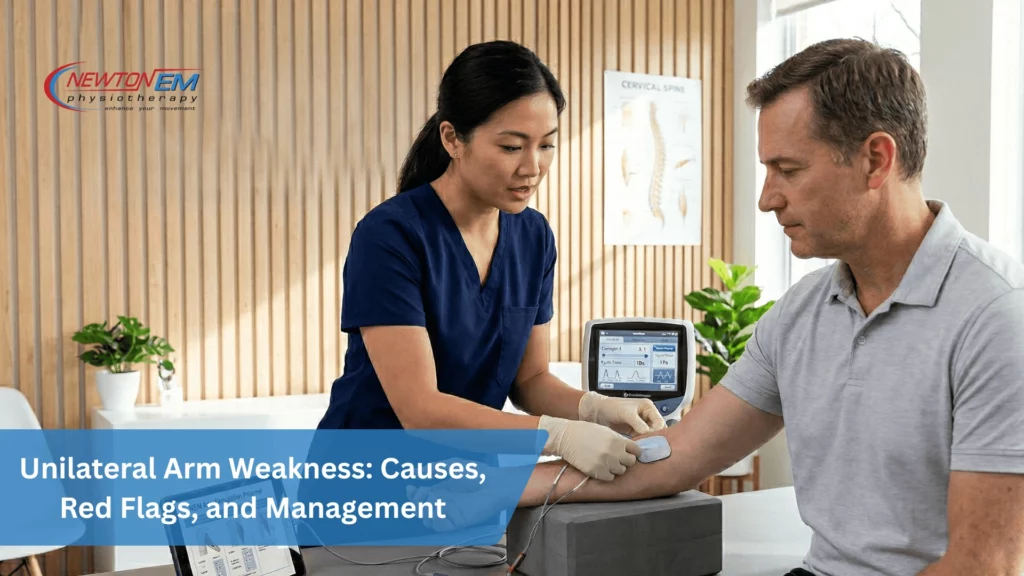
Electrical Stimulation: The use of gentle electrical currents to prevent muscle atrophy, retrain damaged nerve pathways, and stimulate muscle contractions in the weakened arm.
2. Pharmacological Management
A healthcare practitioner may prescribe medications to manage the underlying cause, such as anti-inflammatory drugs (NSAIDs) for inflamed nerves, muscle relaxants for severe spasms, or blood thinners if there is a risk of vascular blockages.
3. Advanced Medical Intervention
If conservative management is not effective, advanced options may be considered. This includes corticosteroid injections to rapidly reduce severe nerve inflammation, or in cases of severe herniated discs or tumors, surgical intervention to physically decompress the affected nerve pathways.
Prevention and Ergonomic Adjustments
Protecting your vascular and neurological health can significantly reduce your risk of developing unilateral arm weakness:
-
Maintain Vascular Health: Consume a balanced diet rich in healthy fats, manage blood sugar levels, and exercise for at least 30 minutes a day to promote cardiovascular health and reduce stroke risk.
-
Prevent Postural Strain: Avoid carrying heavy loads on one shoulder continuously. Take regular breaks to stretch if your job requires repetitive upper body movements.
-
Optimize Workplace Ergonomics: Ensure your computer monitor is at eye level and use wrist supports to prevent conditions like Carpal Tunnel Syndrome from developing.
By staying vigilant about your symptoms and seeking prompt evaluation from a healthcare professional, you can effectively manage unilateral arm weakness and protect your long-term mobility.
Disclaimer: The information provided in this article is for educational purposes only and is not intended to be a substitute for professional medical advice, diagnosis, or emergency treatment. Always seek the advice of your physician or other qualified healthcare practitioner regarding any medical condition.