

Physical Therapy for Postural Strain: Why Massages Fail
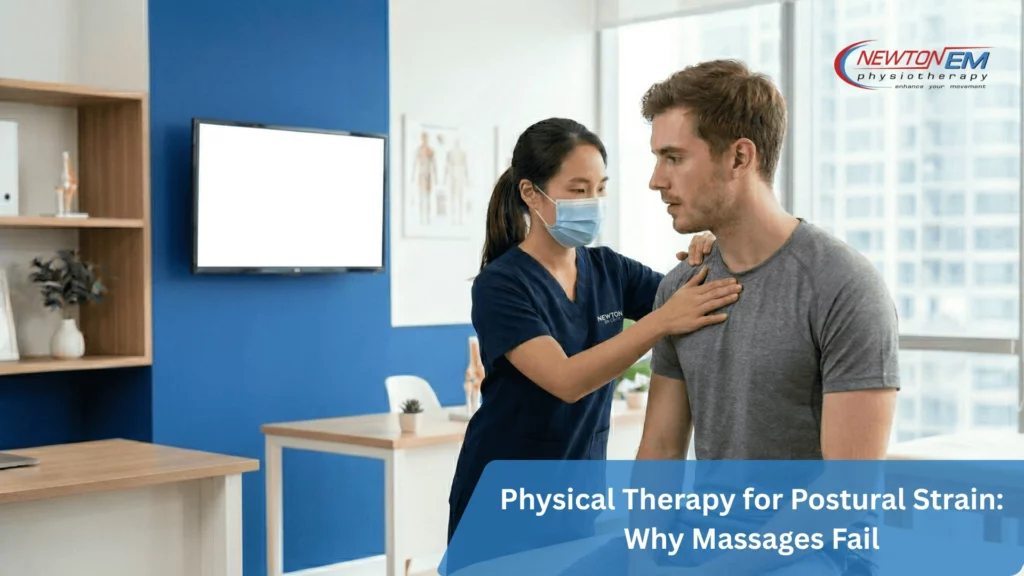
If your neck, shoulder, or back pain returns just days after a deep tissue massage, you are likely suffering from Chronic Postural Strain or Repetitive Strain Injury (RSI). Massages only provide temporary relief by relaxing superficial muscles. Permanent recovery requires targeted Physical Therapy to correct skeletal alignment, release deep myofascial trigger points, and fix the root cause of desk-related musculoskeletal pain.
Why Does My Back Hurt at Work Even After a Massage?
Many desk workers try to massage away the stiffness caused by sitting at a computer all day. However, if you suffer from chronic Tech Neck or RSI, a standard massage will not provide a permanent cure. Here is why the pain keeps coming back:
-
Superficial Relief: Traditional massages relax the outer layers of muscle but fail to address deeper structural imbalances, such as spinal misalignment or poor ergonomics.
-
Myofascial Trigger Points: Prolonged sitting causes the fascia (connective tissue) to bind and form deep, painful “knots.” These require specific clinical techniques to release.
-
Nerve Irritation: Chronic tension can compress nerves, leading to radiating pain. If the underlying posture isn’t corrected, the nerve remains pinched regardless of how much the muscle is rubbed.
To break the pain cycle, you must stop treating the symptom and start treating the mechanical dysfunction.
5 Warning Signs Your “Tech Neck” Needs Medical Attention
If your body is not responding to rest or massage, it may be entering a state of chronic Work-Related Musculoskeletal Disorder (WMSD). Look out for these five critical red flags:
-
Short-Lived Relief: You feel better for 24 to 48 hours after a massage, but the stiffness returns almost immediately when you sit back at your desk.
-
Persistent “Knots”: You experience sharp pain in the exact same spot repeatedly. This indicates a hardened trigger point that requires professional intervention.
-
Radiating Pain: The ache spreads from your neck down to your shoulders, or from your lower back into your legs.
-
Constant Rigidity: Your muscles feel tight and hardened 24/7, even when you are lying down or resting.
-
Numbness or Weakness: You experience tingling, “pins and needles,” or a loss of grip strength. This is a severe sign of nerve compression (such as Cervical Radiculopathy).
If you experience two or more of these symptoms, it is time to upgrade your treatment plan.
Massage Therapy vs. Physical Therapy: Which Do You Need?
Understanding the difference between relaxation and rehabilitation is key to curing postural strain.
| Feature | Spa / Traditional Massage | Clinical Physical Therapy |
| Primary Goal | Temporary relaxation and stress relief. | Long-term pain elimination and structural repair. |
| Assessment | General full-body touch. | Holistic Postural Analysis and neurological testing. |
| Techniques Used | Kneading, rubbing, and acupressure. | Manual Therapy, Joint Mobilization, and Exercise Therapy. |
| Best Suited For | Occasional soreness or mental fatigue. | Repetitive Strain Injury (RSI) and chronic desk pain. |
Who Benefits Most from Clinical Physical Therapy?
Physical therapy is not just for athletes recovering from surgery. It is the gold standard for office professionals dealing with:
-
Chronic Pain Sufferers: Those whose pain has lasted longer than 12 weeks and does not respond to painkillers or rest.
-
Desk Workers: Individuals who sit for 8+ hours a day and are developing “Tech Neck” or rounded shoulders.
-
Preventative Care Seekers: Professionals who want to correct muscle imbalances before they develop into irreversible spinal issues.
How to Choose the Right Physiotherapy Clinic
Not all clinics are created equal. To successfully treat Postural Strain, look for a facility that offers:
-
Direct Assessment: Your treatment should begin with a thorough structural and movement analysis by a licensed physical therapist.
-
Personalized Rehab Programs: Avoid “one-size-fits-all” treatments. Your program must be tailored to your specific daily habits and muscle imbalances.
-
Advanced Modalities: The clinic should utilize a mix of Manual Therapy, therapeutic exercise, and advanced equipment to accelerate tissue healing.
At Newton EM Clinic, our experienced focus on the root cause of your pain. We design holistic, targeted rehabilitation plans for professionals to ensure that once the pain is gone, it stays gone.
If you are tired of the endless cycle of temporary relief, book a consultation for our dedicated corporate and desk-worker physical therapy programs.
Disclaimer: This content is for educational purposes only and is not a substitute for professional medical advice, diagnosis, or treatment. Always seek the advice of a qualified healthcare provider regarding a medical condition.